Monday, 30 September 2013

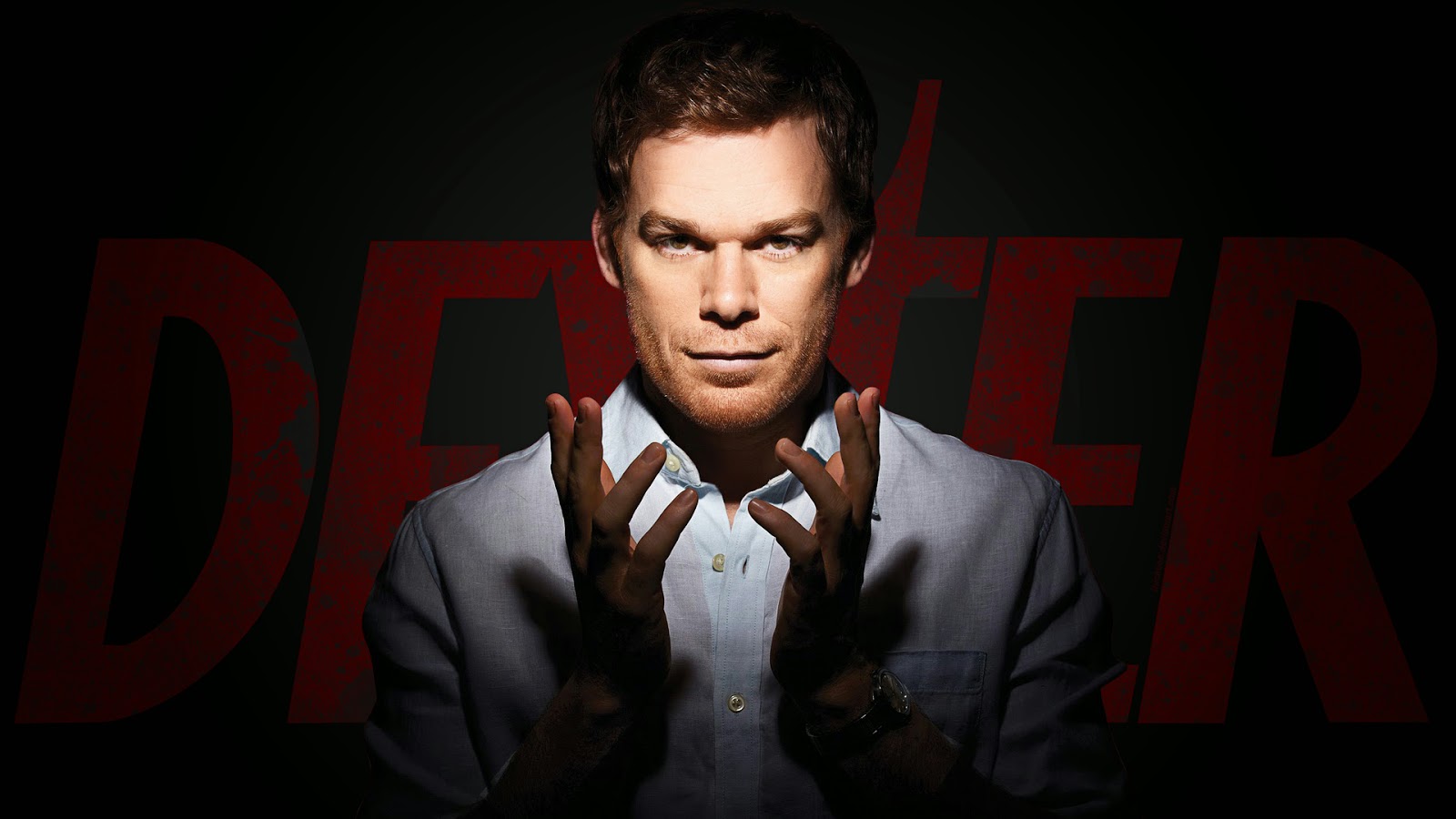
Dexter - Gone


DEXTER Morgan has hung up his knives, torn down the polythene walls of his mobile kill room and said goodbye to Miami.
I was drawn to the early series, nice premise: serial killer avenging angel who kills only those who slip through the fingers of true justice whilst working inside the police department. It was always cheesy, the dialogue would clunk along but there was enough in those early series to keep me watching. But gradually the clunky dialogue got worse and the murdering monster of the week format was replaced by increasingly implausible storylines - ok they were always pretty implausible but somewhere after John Lithgow's turn as the mad murderer things on Dexter took a turn for the worse.
As the show made more illogical leaps I jumped ship. There's only so much plot exposition I can take from characters lips. No longer did they show, they relied increasingly on tell. Characters walked around telling each other the plot. And telling. And telling. Enough.
Dexter and I had parted company.
And then I saw the billings for The Final Series. I dipped back in. Boy oh boy. Had I misremembered the early series or had it always been this bad. Extraordinary gruesome things would happen and characters would have almost no emotional reaction. Jeeze, even if you worked for the police department surely you'd recoil at the sight of a dead body with a great melon slice taken from the back of the head? Wouldn't you? Not these characters. It was almost like they were reacting to a newly baked cupcake - despite the plethora of baking shows on TV you can't get emotionally excited about pastries.
Dexter became a show where the shark wasn't jumped once or twice, it was jumped in almost every other scene. Nothing made any sense any more.
Is this what happens when you extend the life of a series way beyond the potential for stories or was it laziness or - I'm worried by the thought - did they actually think this was good? Please god no.
The Final Series was car crash TV for me. I hated myself for looking but I had to. There was so much wrong but as we all know we learn more from the disasters than from the triumphs of screenwriting.
We writers struggle with our own plots and characters and stories; desperate that we stay the right side of the cheesy, the cliched, the hackneyed, it ain't as easy as you'd imagine. We need a slap to keep us on the right road.
Dexter's demise is the slap we all need.
I watched the whole last series. We laughed, we shouted at the TV, we groaned and we fiddled with phones and computers whilst trying to ignore the utterly dreary bits. The plotting and shooting of Ed Wood's greatest work 'Plan 9 From Outer Space' was starting to look sensible alongside Dexter's final antics. But I have to admit that I thought - wrongly - that they'd surely hit their stride again for the last ever episode. His past would crawl from the shadows, he would face a final reckoning, Dexter would not get out of this alive.
Well...
It turned out to be a hilarious mess that really didn't have any story left to tell. His sister Deb, who'd been shot but seemed to be okay, suddenly took a turn  for the worse - in yet another off-screen moment - her demise was reported by a doctor who was there when it happened (I'm actually laughing out loud now). Dex's foul-mouthed sister had shuffled off her mortal coil (Deb was almost always believable and one of my favourite characters).
He sent his son off with his new (mass murdering) love to Argentina (much had been made of them all fleeing to the sanctuary of South America, though why in God's name any of them thought that was a good idea was never explored).

Then he went looking for Deb's killer in jail and killed him in the full glare of the prison cctv - an action brushed off by Miami PD as 'obviously self defence, off you go'. Any attempt at police procedural went out the window, boarded a motor boat and headed off out to sea.
And that's where Dexter headed. Out to sea, into the force of a hurricane heading for Florida, Deb's  dead body on the back seat. Having dispatched his sister to a watery grave he hit the throttle and pointed his boat - The Slice of Life - towards the storm.
When his demise was discovered by his new love 'in Argentina' whilst browsing her tablet in a coffee shop in downtown Buenos Aries her reaction was in keeping with all the other emotional reactions to death in this series. Hardly a flicker. No sign of shock, barely a watery eye, nada. Instead she turned to Dexter's son and said. "Let's get some ice cream".
The whimper was almost complete - but hang on, what's this:

Cut to

Ext. Loggin camp - Day

A bearded guy climbs down from his log-laden truck. We glimpse him, he looks a bit like Dexter.
Oh my god! It IS Dexter. He's not dead after all !

We follow him back to his log cabin and -

(I'm ahead of the writers now, he'll go inside, pick up his phone and make a call to South America. The beard tells us enough time has passed, any trail to his mass murdering love will have gone cold. Dexter, his lover and his son can be a family at last).

Uh, no.

This is it. No twist on the twist.

He's a logger now. One who managed to drive his boat into a hurricane then swim miles back to the shore - or maybe he swam to Canada.

He looks at camera and we

Cut to black.

What began as a dark and interesting show ended on a note soap opera would be proud of.

Dexter. R.I. P
(please, no resurrections)


Friday, 2 August 2013

Goodbye Charlie

Charlie 

My dear friend and fellow writer Charlie Adams has died. For those of us who worked on British television entertainment shows of the 80's and 90's Charlie was the Gagmeister supreme - his Twitter account was @gagfather. His lines graced early Saturday evening shows on both BBC and ITV. He wrote for Bob Hope, Bob Monkhouse, Jimmy Tarbuck, Les Dawson, Mike Yarwood, Bradley Walsh, Lilly Savage, Roy Hudd, Bobby Davro...and so many more. 

He had the gift. He once told me that his father had said to him "If your jokes make just one person laugh...you'd just as well pack it in". Charlie's jokes made millions of people laugh. 

In his own words he said he'd spent "...twenty five happy years writing gags and sketches, introductions and put-downs for the World's greatest comedians, superstars, legends, wannabes and the not-even-close. Then one day show business closed down and no-one told him". We pondered long and hard about how to bring some of the fun back into comedy.

He'd been weaned on a certain kind of comedy, he loved the put down but it was never vitriol; he loved the people he was sending up - well some of them - and he knew that if he was too vicious they wouldn't come back for more.

I first met him when I was producing what used to be called 'light' entertainment shows for the BBC. We worked with Noel Edmonds, then the darling of Saturday night telly. Charlie and I hit it off like a house on fire, he was a a Scotsman and I bought the teas. His material always arrived later than requested but was always worth waiting for. Like all writers he could never actually bring himself to sit down and write until he absolutely had to - and then it tumbled out of him.

From that early producer/writer relationship we went on to become close friends and write together. He attempted a number of sitcom pilots on his own but his forte wasn't character and structure his forte was the gag. When I wrote comedy pilots the first place they went was to Charlie - he was a great punch up man. If he'd stayed in America, where he lived for a while, he'd have made his fortune making unfunny sitcom lines zing. 

Not all comedy writers like to laugh, for some it's a serious business and no laughing matter but Charlie loved to laugh. He'd walk into a room and put it down, he was rarely impressed by star wattage but he gave his laughter freely. 

His idols were mostly American, he loved Garry Marshall and Larry Gelbart, The Dick Van Dyke Show and Rhoda. When the latter was mooted as a show that might cross the ocean he was given the job of turning a New York Jew into a waspish Scot. 

We'd talk for hours on the phone about detective fiction and 60's songs. 

Latterly he'd been working on ways to make businessmen lighten up with comedy courses, a children's book he'd asked me to illustrate and, as always, there was a new idea for a sit-com he was noodling away with in the background. 

Charlie found life funny, his son Paul inherited the gene and was lucky enough to have one of the best writers of gags as a dad. Charlie and Shona were always great hosts and his family will miss him terribly.

So shall I. 

So will everyone who worked with Charlie.


Friday, 19 July 2013

Stewart Lee v Michael McIntyre

The comedian Stewart Lee has launched a bitter attack on comedians who use writers. His anger for Michael McIntyre is well know, according to Stewart Lee McIntyre's observational routines are like spoon feeding his audience warm diarrhoea. His act is, literally, shit. Hmmm, harsh.

Stewart Lee is a clever man. A clever, funny man, cleverer than many of his contemporaries but not always as funny and certainly not recognised by the public in the way Lee Evans or Michael McItyre are. It sometimes feels like Stewart Lee really doesn't like this.

I've interviews Stewart Lee a couple of times on my radio show. He comes across as a thoughtful, intelligent, deep individual who has a knack for mining the absurd and a way with words. He's sometimes called 'the comedians comedian'. That probably irks him, the last man to be gifted with that title was Bob Monkhouse. Heaven knows what Lee made of Monkhouse, who wrote much of his own stuff but also used several other writers.

Stewart Lee's Comedy Vehicle - his most recent television show - is a wonderful thing. I enjoy it immensely, Lee is a very clever stand up. Two things: 1. the show is script edited by Chris Morris, which given Lee's abhorrence of anyone else's voice (ie another writer) infecting the pure thoughts of the stand up seems at odds with his philosophy and 2. It's very very clever but it's not always very very funny.

There, I've said it.  He's not always hilariously funny. But here's the thing - that doesn't matter. What Stewart Lee has going for him is an intellect that allows him to explore areas other people don't - but not always in a funny way. Between the punch lines there are lots of other words that are aimed at making people think but not necessarily laugh. And that's fine.

But. Sometimes I want to laugh. Really laugh. Out loud.

If I want to laugh like a drain at less intellectually demanding material, consistently funny material, over an hour - or more - then I'll go see someone like Michael McIntyre or buy his latest DVD. And while I'm watching I m not thinking 'he didn't write that bit', that's not a pure comedic thought that kept him up last night as he polished it into a sparkling nugget of hilarity.

I don't buy this 'purity of thought' argument.

The first time I met Stewart Lee he was being targeted by religious groups for his so-say blasphemous libretto to Jerry Springer: The Opera. The BBC were worried they'd have to smuggle him into the studio past the outraged people with placards, there to hiss at him, spit and threaten - some people had got very hot and bothered about the swearing and the depiction of Christ. Lee had answers to all their objections. He intellectualise their concerns and shot them down in flames. Les Dawson (who wrote most of his own stuff) never had to run the gauntlet, did that make him less funny?

I can't say I enjoyed Jerry Springer: The Opera. It seemed to me to be swamped by so much swearing the cussing just got in the way, I found it repetitive (of course it was, that's what Operas are!!) I know, but I got (oh dear) bored with it. Didn't make it to the end. I know, I am a pygmy in a land of intellectual giants but I didn't find it funny. And I know - because so many people told me so - I should have been rolling in the aisles. Well, one man's meat is another man's bicycle.

Enough people disagreed with me to make Jerry a short lived sensation. Stewart Lee prodded and poked and did something original. And that's what he strives for - originality. God bless originality.

But.

If you're paying to see your favourite comedian you want him or her to be funny. Very funny. And for the guys who regularly do big tours that means they have to collaborate - goddamit use writers!!!!

Since the 80's and the rise of the alternative comedian we want our stand-ups to be funny and thoughtful, we want a political edge, non racist or sexist routines that shed light on the human condition. The best of the post 80's comics are very good - many are ordinary. I'll say it again, what most people want when they pay to see a comedian is a laugh - many laughs, a shower, no tsunami of laughs.

Some would argue there is a difference between a stand-up and a comedian, the latter more of a performer. In the end they are both trying to get a laugh and if some of those laughs are generated by writers what's wrong with that. How does that sully the words in their mouths?

The idea that a comedian who 'performs' other people's material - specially written for them as apposed to gags ripped off from other comics as was the case pre 80's - is somehow the lowest form of life on the circuit is frankly bollocks. Great comedians have collaborated with writers for years.
Dave Allen - the grandaddy of alternative comedy used writers - here was never a funnier man.

Morecambe and Wise use writers - don't tell me they were sketch comedians, they trod the boards for years and incorporated specially written material into their live act.

I've just read a columnist who says she 'misses the comics who offer sincerity as well as laughter'. Why does speaking someone else's words have to be insincere? You think all those sincere politicians are writing their own speeches? Duh.

I don't believe any old writer can write for any comedian but I've written for a number and the material that works best is that which fits their persona as well as their mouth.

The Beatles wrote their own songs. Elvis didn't. So what.

I have to be in the mood for Stewart Lee. I'm always in the mood for Mike Mcintyre, Peter Kaye...and the sainted Doddy.


Friday, 5 July 2013

The Play Must Go On


I don't know how old the old saying 'the show must go on' is but I wouldn't mind betting it was originally uttered in Greek. Actually, it might even go back to the cave men and have nothing to do with theatre at all, "It's pissing down out there, Ug. We can't go hunting in this". "Oh yes we can, Og. The show must go on".

When it comes to live theatre you can't let the paying audience down. With 48 hours to go before George Bernard Shaw's 'Candida' hit the stage, part of the Theatre Royal Bath's summer season, one of the main actors, the always splendid David Troughton, had to take flight as someone in the family had fallen ill.
Shame, I was looking forward to seeing him. Two weeks ago he'd been a guest ago on my Sunday radio show and we'd enjoyed twenty minutes of backwards and forwards, tales of luviedom, telly and his late father, Patrick Troughton, who played the second Dr Who.

No problem, these things happen. That's what understudies are for.

There was no understudy.

You can imagine the panic. "We have a crisis!" Not like the one in Cairo, or the economic hell that is Greece, a theatrical crisis which may be small beer by comparison but one I'd love to have seen being played out. They'd been rehearsing for four weeks, everything was ready to go. This isn't like television where they learn half a page at a time, shoot and learn the next page. You have to know the whole part. All your words and the cues.

And deliver it in a believable way.

And get laughs.

Before the play began, in a moment that was more The Two Ronnies than Theatre Royal Bath,  the director appeared through the red curtain to tell the audience what had happened, the disappointment of losing David Troughton, the relief of finding someone to fill his shoes - RSC actor Christopher Godwin. And then the scary part, he said that Christopher Godwin would be carrying a script. Carrying a script, on stage, how was that going to work? Suddenly there was a shuffling of bums and nervous energy in the auditorium. Immediately my mind went to the wonderful Two Ronnies Amateur Dramatics sketch in which Ronnie Barker plays a a butcher who is a late replacement for a cast member who's gone ill. Barker reads his part from a book, losing all the intonation and misreading much of the dialogue. Hilarious, but not what was required in 'Candida'.

Curtain up and the first moments went well enough but then Chris Godwin was still backstage, you could feel the audience waiting for his entrance. Would he be reading, bumping into the furniture? "Sorry, love. I'll take read that again".

Forget it. Members of the RSC are the marines of the acting profession. Though Godwin carried a script book he hardly referred to it, he'd learnt 95% of the role in two days - two days! - and put in a terrific performance. Needless to say he got a huge round of applause at the end.

So today it's hat's off to old school English actors, making a perfectly wonderful drama out of a crisis.


Thursday, 20 June 2013

Goodbye, Jimmy. James Gandolfini Dead.


"Woke up this mornin..." as the theme song to the Sopranos says, but who could have imagined the  news about James Gandolfini's death at 51.

In The Sopranos he was to play the ultimate television bad guy, a character who was as complex as any ever seen on the small - or big - screen. Tony Soprano was no cliche, he was a living breathing man. A brow-beaten father, husband, philanderer, worrier, killer. That was the trick, to make Tony human.

I first noticed Gandolfini as Bear in Get Shorty, a strong arm character with beard and ponytail - but one with a heart, cradling his little girl in his arms. There's more than one side to any thug. Gandolfini knew that because he was so much more than just a bad guy actor.

David Chase, the creator of The Sopranos, wrote the series mainly through Tony's eyes. When we weren't with Tony we wanted to be. How could it be that a killer, a thug, a fashion-free Mafioso could be so compelling? Gandolfini made him so. A writer can write the word and action but an actor has to bring the twinkle in the eyes, the smile that plays across the lips, the power that suddenly burst forth. Gandolfini had that power in spades.

Contrast the mob boss scenes with those alone in a room with Dr Melfi. So often he sits there with a blank expression, like a schoolboy waiting for admonishment. Whenever he gets too close to working out what really lies at the bottom of his problems he strikes out, explodes, he doesn't want to face the immorality of what he does. Without those scenes in the doctor's office would we have cared about him quite as much, I don't think so. It gave us the insight into his inner conflict. He's a soldier. There are rules. He follows the path. Gandolfini added so many layers on top of the writing.

To be Tony Soprano was a blessing, but for some actors it would also have been a curse. How could an actor shake off that role to play others. Gandolfini did. In The Mexican, alongside Julia Roberts, he plays a gay hit man, in In The Loop he's a Lt General working inside an insane political system, in Zero Dark Thirty he's the C.I.A Director.

He even appeared on screen in the down and dirty musical Romance and Cigarettes - Tony Soprano sings! There was much more to him that one role.

When I first saw The Sopranos, the night it debuted here, I knew I was watching something special. I followed the show through the twists and turns of every episode, every series until the enigmatic ending that still has fans divided. To all of us who watched and loved the show Gandolfini's portrayal of  "T" was unmissable. We'll miss him.

A man with so much talent dies at 51, a tragedy but as Tony would say, "Whadyagonnado..."


Monday, 17 June 2013

S Is Not For Superman

 Well, who'd have thought it, turns out the S isn't an S at all and it absolutely doesn't stand for Superman. Nice new suit, no sign of the red pants outside the trousers, not that they ever were trousers but that was the old gag, "if Superman's so smart, how come he wears his pants outside his trousers". Now he doesn't. I guess he smartened up. Though I read they tried the red pants, tried them all ways apparently. Couldn't make them work, not for today's sophisticated 14 year olds. No sir.
What we need this reboot around is an altogether darker blue suit and a really rich red cape and no pants. he's smarter remember. Oh, is he?

Saw the Man of Steel yesterday - if it's such a big hit how come the cinema was about a fifth full? - I digress.  From the word go I got a bad feeling. That feeling I get when actors eyes are moving around in close ups when they should be still, perfectly still.

I learned that from Sir Michael Caine. He knows a thing or two about close ups and was in that other DC comics hero movie, Batman, the one directed and produced by Chris Nolan, who wears a suit on set but not a dark blue one with a cape. Nolan produces here and shares a story credit, Zack Snyder gets to direct. Unfortunately Russell Crow has never had the benefit of an acting lesson with Michael Caine, his eyes were everywhere and boy did he do a lot of ACTING in this movie.

It all kicks off on Krypton - like so many Superman origin movies before - the planet is doomed, about to blow, Jor El has got to send his kid off into space to...oh hell, you know how it goes. Did we need twenty minutes of this or was it just down to the fact that with the Crow on board you've got give the great bearded one ample opportunity to waggle his eyes and look concerned. I can confirm he did both - but we didn't need it - or the four winged flying dragon thing he used as a taxi.
So, the El kid gets booted off to Earth while General Zod - yes it's THAT Superman plot again - gets all antsy about protecting the bloodline of the Kryptononians ( I have no idea what they're called, they can't be Kryptonites, that's the green rock stuff - of which there was NO sign in this movie so they must be saving that up for the next one when they'll drag Lex Luthor's ass back cos Zod and Lexy-baby are the only two antagonists allowed in a Superman movie by law). Anyway, Zod and his sidekicks get frozen and are propelled into space prison in what looks like rocket powered dildos. Huh? Did no-one notice, or did they put that in just so the twelve year old boys could fnar fnar.

They could have done all this Krypton stuff in five minutes. But then it wouldn't have been so dark. And Dark is what they're going for here. You can hear the pitch now - "Worked for Batman, it'll work for Superman"

Except...

It doesn't.

No really, believe me. Nolan's Batman was a joy. But Bruce Wayne is a guy with gizmos and a cave-full of personal issues to wade through.
Superman is a god. He's indestructible - it's there in the title: Man of Steel. Once he's gotten used to the idea that he's different from all the other kids - and again, did we need this hammered home four or five times? - once he's used to that then his job is to save people and be the all American hero - but how can anyone best him. Hence the Zod plot. That's why Lex and the Kryptonite awaits.  

For what seemed like an hour we are treated to ol' Suppy and Zod smashing through buildings that then collapsed, exploded, imploded, shattered, twist and eventually turn to dust. They have fist fights neither could win cos they're both 'men of steel' so no matter how hard either one hits the other neither is going down.

So, while all that's going on lets flip a few hundred cars on the streets of Metropolis while people look up and wonder - instead of running the fuck away. I would, wouldn't you?

Here's the good bit, young Clark and his human mom and dad, his adoptive parents in Kansas, on the farm,  Kevin Costner and Diane Lane. Shot like an indie movie the flashback are the only real sections that involve us with characters we might feel something for. I don't know about you but CGI stunts are getting old pretty fast. WE KNOW IT'S NOT REAL so less is more.

What I really wanted was Joss Whedon to have directed and written this. Those guys at Marvel understand the single most important thing when it comes to superpeople films - they have to have humour. Have to. Absolutely. Without humour what have you got...oh yeah, Man of Steel. Barely a quip in the whole movie. Batman got away with it because Batman was a drama dressed up as a superhero movie - but Bruce Wayne has no superpowers and nor do any of his enemies.

As Superman Henry Cavill is fine and dandy. With a few amusing lines he'd have been better - but no one on the planet would ever look better in that suit. Amy Adams - wonderful actress, if you haven't seen it, go see The Fighter - does what she can with Lois Lane but she gets saddled with some god awful lines ("I'm a Pulitzer Prize winning journalist" yeesh) and doesn't have that much more to do than a Dr Who assistant from the 70's. And please, could someone explain to the makers the effect G-forces have on the human body before the next outing. Lois scooped up and flown away at seven times the speed of sound might look a little more ruffled than she is here.

When I saw Christopher Reeve in Superman The Movie I was twenty years old. It gave me a lump in my throat, thrills, laughs and a wonderful cinematic experience. When he catches Margot Kidder as Lois as she falls he looks into her eyes and says, "I've got you". She looks into his and says, "Yeah, but who's got YOU?" I cared about them. Sorry but I didn't care about the Man of Steel.

By the way, the S on his chest isn't an S at all. It means...hope.

Hope the next one's better.


Saturday, 20 April 2013

Minnion Bumps Into His Boss On The Stairs

Another brief glimpse into the world of Michael Minnion, radio show host.

He bumps into his boss on the stairs. His boss is engrossed with his brain training DS game.

Michael: (cheery) Morning.

Boss: Um?

Michael: Spring's on the way.

Boss:  Really, do we have that any more?

Michael: It may not seem like Spring but...

Boss: They should rename the seasons Wet and Dry. And More Wet. Have three instead of six.

Michael: Six? Actually...

Boss: Seriously this is a good idea. We should do a phone-in. Who does the phone in?

Michael: Uh...I do.

Boss: Really? How did that happen? Ok, well, we can change that.

Michael: You want me to do a phone in on re-naming the seasons?

Boss: No, of course not.

Michael: That would be a pretty stupid...

Boss: Not you. We could get someone with...gravitas, someone who can empathize with a listeners who's up to his knees in water.

Michael: We've been talking to those people for months. Some sad stories.

Boss:  I'm not talking about sad stories. You need to be more upbeat with these people, don't let them come on and whine. I hate whiners.

Michael: They've lost all their possessions, some have no insurance.

Boss: Encourage them to sing, do a limmerick.

Michael: About being flooded.

Boss: Get them to Tweet it. In fact get everyone to tweet, what is this phone thing anymore. We don't live in the 15th century. Phones are so 15th century.

Michael: Actually...

Boss: Tell them we have a prize, a yacht, money.

Michael: There's a prize for the best limmerick about being flooded?

Boss: Yes, yes. Just say that.

Michael: But that's misrepresentation.

Boss: (looks into Minnion's soul) Do you always wear jeans?

Michael: yeah, most days.

Boss: Don't.


Sunday, 30 December 2012

What Were We Watching in 2012

The Olympic and Paralympic Games cloud my vision, I can barely see back before them, though my memory retains a vague recollection that a hot Spring had people from the Environment agency handing out hose-pipe bans and warning we'd need three months solid rain if the aquifers were to be replenished. 

Never grant these men their wishes again. 2012 was the year it poured. The aquifers are now overflowing and still it rains. 

Even most sceptics were won over by the summer of sport, not just by the quality of the achievements but also by the way in which the BBC managed to pull together and get it right. All the BBC, TV and Radio and those never to be left unmentioned web pages where we can get more information about the race we've just watched. What more can a web page add to Mo? 

This is the same BBC that got the Royal Flotilla coverage of the Queen's Jubilee year so wrong and later went on to turn a gun on itself with its treatment of the Jimmy Savile Newsnight story and later accusations leveled at a senior politician. One step forwards, two steps back.

The Olympics were about extraordinary athletic achievement and spectacle. I'm trying to forget Radio 1's Trevor Nelson, telling me during the opening ceremony, 'see that bloke in the crowd there? He's my mate!'. Dear god. Not content with his lame-brain inanities at the beginning of the Olympiad the Beeb had the temerity to wheel him out for the closing ceremony too. 

But oh that opening ceremony. Danny Boyle you made us proud to be British and we all thought we'd have to watch it from behind the sofa, like we used to Dr Who. Surely it would be one long cringe; how wrong could we be. Did I miss Danny's knighthood or is he a refusenik like Alan Bennett, "Thanks but no thanks, I'm ok as I am". 

Would you turn down a gong? As New Year's and Queen's Birthday Honours come around I find myself wondering why we perpetuate these arcane medals. Not that I'm ever likely to be called to the palace, but should the manila embossed envelope arrive I'd have to write back a pithy note saying, "I'll pick up mine when Danny Boyle picks up his". 

There was so much to look forward to twelve months ago. The world had it's eye on us and we  didn't disappoint.

On  the box Mrs Brown took hold as the new sit-com sensation - I remain to be convinced. Most big laugh still rely on the inclusion of the word 'fuck' to get the laugh.

A raft of American shows continued to hold my attention. Justified, Boardwalk Empire, Homeland - though the latter in its bid to become a franchise had some horribly clunky moments and may drift even further from the tension of the fine first series when it returns for series three. 

Game of Thrones was good rather than great but delivered a terrific series ending episode.  

 If you haven't been watching Treme it's time to catch up. New Orleans in the aftermath of Katrina seemed a strange option for The Wire creator David Simon's next project but it's approach is a delightful weaving of human stories.


One actor who suddenly appeared from  nowhere was Bobby Cannavale who played the psychotic Gyp Rosetti in Boardwalk Empire and an only slightly less psychotic doctor in Nurse Jackie. The latter is a treat, a drama masquerading as a comedy. It delights with ever episode.

Finally, Mad Men remains a joy. Despite the show being off air for more than twelve months it returned with a confidence that only a show presided over so tightly by one mind can achieve. Mathew Weiner's compelling meditation of the shifting cultural tides of mid 20th century America is just extraordinary. It shows us what we were and what we now are without ever telling us. The best example of writing one could ask for - but then I'm biased. 


Sunday, 23 December 2012

Minnion Meets his New Boss

The following conversation was recorded and sent to me by Michael Minnion, radio show presenter of many years who recently met his new boss.

New Boss: Hi, you must be Martin.

Minnion:    Michael.

New Boss: So...(avoiding eye contact) what did you want to see me about?

Minnion:    You asked to see me.

New Boss: Yes, it's good we get to know each other.

Minnion:    You've been here six weeks.

New Boss: I've been listening.

Minnion:    I hope you like what I do.

New Boss: I don't like, I love what you do.

Minnion:    (taken aback) Really.

New Boss: I haven't heard a whole show...

Minnion:    Oh.

New Boss: You're not the only show on the air.

Minnion:    No but...

New Boss: Tell me something, and be honest...do you think it's getting a bit stale?

Minnion:    The station?

New Boss: Your show.

Minnion:    I thought you said you loved what I do.

New Boss: You mustn't take these things literally. I was speaking generically.

Minnion:    Sorry, you've lost me.

New Boss: You're figures are very good. Figures are very, very important.

Minnion:    We've doubled the numbers of the previous guy.

New Boss: Numbers aren't everything. He wasn't very good was he.

Minnion:    He did the show for twelve years, the audience loved him.

New Boss: If he was that good why did he leave?

Minnion:    He was killed in a car accident with four other people.

New Boss: I want you to think about your show.

Minnion:   I hope I do that all the time. I work hard on the content.

New Boss: I'm not talking about the content, Martin, I'm talking about the texture.

Minnion:    O...K...so that's what...exactly?

New Boss: Pretty self-explanatory.

Minnion:   Actually I'm not sure I understand.

New Boss: Come on Martin, do I have to explain everything.

Minnion:    Michael.

New Boss: could you stop interrupting. Imagine I'm a listener.

Minnion:    You're a listener...

New Boss: I'm driving along in my 7 series BMW, the one that pushes the boundaries with flowing lines and fabulous handling. (stares out the window)

(long pause)

Minnion:    (coughs) You're driving...

New Boss: Um? Yes. Driving. When I have you on in the car I want to be able to reach through the radio and touch you.

Minnion:    Metaphorically.

New Boss: Literally. What will I feel?

Minnion:    Feel?

New Boss: What do you feel like. Are you rough, smooth, sticky, porous. You need to consider the listener.

Minnion:    I do. Always. But what has...

New Boss: I'm not talking about those listeners who listen to you now. I'm talking about all the listeners who aren't listening to you. What are you providing for them?

Minnion:     How can I provide something for people who aren't listening to me?

New Boss: (hand up) Please, don't bring attitude into this office.

Minnion:    If they're not listening...

New Boss: ...if they're not listening it's because you're not giving them anything to listen to. Work on it. OK? (hits intercom) Emma, what time's my one o'clock?

Minnion gets up and awkwardly backs out of the office, his head reeling.

to be continued...


Tuesday, 28 August 2012

A Touch Of Police Squad

I remember the first time I saw Police Squad - not quite like remembering the moment when JFK was shot but I was too young for that, probably in the garden digging a hole - I don't know where I was beyond 'in front of a TV laughing like a drain'. If drains laughs. 

Police Squad was the invention of Zucker, Abrahams and Zucker (who all sounded to me like people ho had been round the table when they wrote the Bible) Pat Proft wrote episode three (another writer at that bible bash surely). It was a spoof of the police series on Tv in the 70's with a high preponderance of puns, sights gags and non-sequiturs, all gloriously delivered in dead-pan fashion, mostly by Leslie Nielsen playing Lt Frank Drebin. Hank Simms, who'd worked as a TV announcer of 60's and 70'd TV cop shows, announced the title of each episode, though his words never matched the caption on screen. From the tiles onwards the show was a non-stop gag-a-thon. 

It was glorious in its freshness, its surreal quality, its joke count. But even as I watched I was aware that I'd stopped laughing out loud and started smiling, then nodding knowingly and then internalizing the humour - my inner comedy man saying, yeah that's funny. It's so hard to keep laughing at this kind of stuff, even when it's hilarious. 

It was cancelled after just six episodes but spawned The Naked Gun: From The Files of Police Squad  films. Those movies took millions, they were and are still loved. 

On Monday the grandson of Frank Drebin - in tone if not name - found his way onto Sky 1 in Charlie Brooker's Touch Of Cloth. A show that does exactly what Police Squad did in every way but a little more gruesomely. It spoofs crime drama beautifully, John Hannah and Suranne Jones gamely play characters not too dissimilar from ones they play in actual cop shows, and it hits you with a hail of jokes that are delivered with such regularity and speed that you have to stop, rewind and sometimes pause to get the full benefit - pause to read the signs, which are everywhere, and are hilarious.

It is relentless. It never stops with the gags, never for one moment are you presented with anything other than full-on jokes. I laughed out loud at much of the first episode but by episode two, shown the following night, I was smiling, nodding and not quite as enthralled as I had been. Maybe this was a fault of the scheduling. The shows run an hour with commercials with a high joke count to sustain, it's also a long time to keep laughing at the same kinds of gags. One a week would probably suffice. 

But well done Charlie for resurrecting the corpse of Police Squad, dusting it down and standing it up for a new audience.  


Saturday, 4 August 2012

Nobody Knows Anything

The William Goldman maxim that 'Nobody Knows Anything' in Hollywood extends way beyond California. Whilst those of us who scribble obviously know everything, other less fortunate mortals - those who hire us/fire us, those who are on the staff of broadcasting companies that pay us the money that allow us to buy shoes for our children and bread for our tables - struggle to understand anything.

Patently this isn't true.

I've worked with and for inspiring producers who could spot things that others (me included) couldn't see for looking. Men and women whose judgement, wise words  and light touch is and was to be cherished. They know who they are.

I've also worked for and with men and women who should never have been allowed in any door of any broadcasting company in any known universe. They have no idea who they are.

None of us gets it right everytime, even the mighty beasts - have you seen Aaron Sorkin's The Newsroom?

The pilot was almost unwatchable. I never made it beyond fifteen minutes of episode two. And this is a writer I love. But the whole thing is out of kilter. The idealism that sat so well in the West Wing seems so out of place in a Newsroom. Believe me, I worked in one as a kid and I've walked through them as an adult. Okay, so my experience is British and he's writing an American newsroom where many dynamics are different but even so, they are not populated by young idealists. The idealistic journalist is a thing of the past. Or Hollywood legend.

Young idealists last about a week. Then they become young cynics. Then disillusioned young cynics. If they grow old in the newsroom they become disillusioned old cynical has-beens - and frankly they are a million times more interesting as people and characters than the ones Sorkin has chosen to populate his latest show with.

I heard him say he mis-wrote Studio 60 on The Sunset Strip - a show I had a lot of time for, not just me, there was a sizeable crowd sorry to see that one bite the dust. But Sorkin knows his stuff and when he says he knows what he did wrong you have to believe him. So, when The Newsroom trailers hit the air, like Pavlovs pooch, I began salivating. I didn't realise what I was about to be served was a dog's breakfast. This show feels under researched, under powered; a hark back to a kind of show I thought had disappeared from our screens - and nowhere near as good as Studio 60.

So Goldman's maxim stands. Nobody Knows Anything. Even Sorkin, who has a brain the size of a of planet, can get it wrong. But I'm sure he's working on getting it right.

Someone who got it sooooo wrong that it leaves your mouth gaping was script editor called Ian Maine. Mr Main worked for the BBC at the time a show called Fawlty Towers was being proposed. You may have heard of Fawlty Towers, I doubt you've heard of Ian Main.

He really didn't know anything - what's more, he put it in writing


.


Wednesday, 18 July 2012

Cheer Up Ken


The BBC Writer's Festival in Leeds last week was fascinating on a number of levels. It's always good to talk to men and women on the same journey, it's good to learn from some of our more successful writers, it's good to shoot the breeze and it's good to hear what everyone else is going through.

BBC Writer's Festival Logo -erm, what exactly is it? 

Doesn't matter what stage your writing career is at, you will have horrors that haunt your sleeping and waking moments. The series that never was - had a few of them - the episode that got rewritten because the director didn't like it - been there, the T shirt's a little old but still smells - the producers who loved your work so much they forgot to buy it, even though you'd told all your friends you'd had a series commissioned - don't want to even think about that, still shuddering now.
But amongst all that we had a good laugh and swapped some mighty good stories - those that weren't true had been written and rewritten in our heads to sound true. Stories at a writer's festival should be the best stories ever told!
In one of the sessions the question was posed, "Is the Grass Greener...? " It was aimed at dispelling the myth that writing in America for American series is better than knocking things out for British audiences. Everyone agreed on one point - whatever the pain - the money is much, much better. The American system demands a different kind of writer, one who will pool his or her plots in the writer's room as the series is mapped out, arcs found and stories 'broken'. Breaking a story is something I've learned to do even though British writers don't really write the same way as our better paid American counterparts. The 'breaking' is working out what happens just before the commercial break. Makes sense that you work out plot points so that there's a cliff hanger of sorts at the point at which our work cuts away to adverts for diarrhoea pills and sanitary towels - we have to provide an incentive to watch all the way through the break to find out what happens (at least for those people who still watch TV in real time).
In this session we got to hear from some guys who had experienced the best and worst of the American system and also from Swedish writer Lars Lundstrom who's had his work adapted over there although he's never written in the US. Lars being on the panel opened the door to talking about whether life is greener in Sweden. Turns out there's one TV station and not many writers or actors.
Even so, rcent Danish and Swedish series have become must watch TV for so many of us - The Killing, Borgen, The Bridge - have all exerted a mighty influence on the market. Commissioners now look at dramas set in Brighton and ask "Could you make it a bit more  Nordic?" - and with a straight face.
 Lars wrote on the Swedish series Wallander, the character Kenneth Brannagh plays in the BBC series. Both are based on books by Henning Mankell (I read two last summer and they drove me mad. Hated them, which surprised me because they've sold well and provided Swedish TV and the BBC both with series. It could have been the translation - but I hated the structure and the repetitious  procedural, however..) Lars take on the British Wallander was "It's a bit glum, slower than the Swedish version and devoid of jokes". I'm  with you, Lars. Having sat through two episodes of the new BBC Wallander I feel ready to slash my wrists. The gloomy skies, the washed-out pallet, the moments when old Ken looks off into the distance whilst the director holds the shot forever and a day. I swear he was dribbling in the last episode. The plots aren't great, the characters aren't compulsive, the music drones, the dialogues clunks along - you'd never believe that this is getting a sizeable audience. 
Brannagh is such a watchable actor, so inventive and yet here he'd bringing us a character so desperately down beat you want to scream at the telly.  Comparing it with Swedish and Danish series it doesn't come out well. The stroytelling in the Swedish and Danish series may be slow but the pace of the episodes isn't. It's not MTV, whip-pans and cut, cut, cut but they keep going forward. The Beeb's Wallander clumps along in lead boots. But for me the most telling difference is that series like The Killing, Borgen and The Bridge have compelling caharcters that draw you into the story whilst Wallander seems hell bent on concentrating on one character hell bent on pushing you away.


Saturday, 14 July 2012

Spidey v The Batman


I know, I know, it's been a while. So many distractions to keep a man away from his blog.

The new Spiderman film is out there. Fantastic! Brilliant! Astonishing!  Oh, I haven't seen it and won't be queueing and paying, the reason is simple.The constant re-invention of comic book titles has now got to the point where I couldn't care less how good it is - I'm bored with the genre. Bored, bored, bored. I hear it's very good. Great. Loads of kids - dads, mums and the odd Grannie - will have a fabulous time enjoying it. But it's going back to the origins again, to reinvent the character again. Fire up the franchise motors, break out the MacDonalds tie-in merchandising, dust off the spidey duvets; ladies and gentlemen it's Spidey time again.

But not for me. No siree.

Last comic book caper I saw was The Avengers. It was good, a bit talky for some but i quite liked that aspect of it. Coming away from the cinema we talked about it as we always do, good, bad or indifferent. Love 'em or hate 'em there always something to discuss. To learn from.

But..

Ask me to describe my favourite scene right now - in fact any scene right now - and...sorry, that was me looking off into the middle distance desperately trying to remember anything that happened. Nope, nothing has stayed with me. Not one moment. 

These movies cost as much as the Greek national debt yet have no lasting effect on me at all. They're bubble gum, comic capers, that re-invent themselves with such regularity now that I can't be bothered any more. They've become the new westerns.

Except...

The Batman 'triology' is different (it was never meant to be a trilogy, it just happened when the first one and then the second one went stallar). What Christopher Nolan shaped in the first two films is something far more interesting than anything else out there that features men in capes. Even more interesting than the Watchmen movie. But then Nolan's cv is unlike the directors of other comic book films - with the exception of Kenneth Brannagh who helmed Thor. Nolan has been exploring extraordinary stories and structures since he first got to sit in the director's chair.

Momento - a story told backwards about a man who has no long term, medium term memory.

The Prestige, two rival magicians vie for the ultimate illusion, tricking each other and the audience.

Inception, a film so dense and layered no one could possibly follow it - or at least that would be the feeling of most studios. However Inception was so clever, so absorbing, so intriguing that it found a huge audience and made those dumb-ass execs sit up and realise we want more from science fiction than cgi monsters and endless explosions (Michael Bay take note).

2008's The Dark Knight wasn't a comic book film at all, it was a proper drama, wrapped up in a thriller. Yes, it had the added edge of Heath Ledger's penultimate performance but this was an astonishing piece of work. So many scenes stay with me, even though I've only seen it once.

Every movie can't resonate like that. I like fluff and balderdash in amongst the great tales but too many sweets make your teeth fall out and I'm of an age where I'd like to hang on to what I've got. So, I'm choosing my goodie bags carefully. I'll catch Spidey on the box - maybe - but the Batman I'll be out there queueing for.

Sunday, 17 June 2012

A Televison Tale

This delicious little story comes compliments of Claire Cotton-May who was sensible enough to step away from her television career and step into the real world. However, once a telly gal, always a telly gal....
A man in a hot air balloon realised he was lost. He reduced altitude and spotted a woman below. He descended a bit more and shouted, "Excuse me, can you help me? I promised a friend I would meet him an hour ago, but I don't know where I am."
The woman below replied, "You are in a hot air balloon hovering approximately 30 feet above the ground. You are between 40 and 41 degrees north latitude and between 59 and 60 degrees west longitude."
"You must be a production manager," said the balloonist.
"I am." replied the woman, "How did you know?"
"Well," answered the balloonist, "everything you told me is technically correct, but I have no idea what to make of your information, and the fact is, I am still lost. Frankly, you've not been much help so far."
The woman below responded, "You must be a producer."
"I am," replied the balloonist, "But how did you know?"
"Well," said the woman, "you don't know where you are or where you are going. You have risen to where you are due to a large quantity of hot air. You made a promise which you have no idea how to keep, and you expect me to solve your problem. The fact is you are in exactly the same position you were in before we met, but now, somehow, it's my fault!"

Friday, 20 April 2012

Brilliant TV - No Writers Or Actors Required

It started with a show called Driving School and a woman called Maureen who was a nightmare behind the wheel. The production team wired the car with mini cams and ever nuance of Maureen's inability to turn the steering wheel, brake, accelerate, change gear or understand the concept of a roundabout was captured on VT. Oh how we loved it. Oh how we clamoured for more. The docu-soap was born.

It was the bastard child of those two genres, documentary film making - which had a long and illustrious place in the British Television schedule, with many talented directors and producers illuminating corners of real life that hitherto had lain hidden - and soap opera, especially Corrie, which always boasted good writing and acting.

And the best thing about this new entertainment, factainment, fictionmentary, whatever you'd like to call it was...it was cheap. Drama costs gazillions, so do proper thoughtful documentaries - not as much as drama but still a hefty investment. What the docu-soap did was feed an appetite at a price the broadcasters could easily afford.

Stick a camera in an Airport, On a Cruise liner, up a gum tree. Watch the 'real people' doing 'real things' hilariously. They milked that cow until they couldn't squeeze another drop out of her - and then they milked her some more.

Oo, how some broadcasters rub their hands with glee at the thought of not having to go through that messy business with writers, that messy business with actors and performers. Real people are hot, they're what it's all about.

And now it holds sway as far as music and entertainment is concerned on TV. No need for the classy acts who spent so much time perfecting their skills, no room for real bands/singers/musicians. Get a window-cleaner in who's done some karaoke and can belt a passable rendition of 'Thriller'. Find some mad woman who can't hold a note and give her five minutes. Get some nutter on who thinks crap balloon animals is the future of entertainment. God forbid we use real talent.


Real people. We love 'em.

Actually I do. I love 'em for their real stories and their real heartache, their real ability to to extraordinary things and the real tragedy they suffer in their real lives. I am inspired by the tales they've told me, exhilarated by the things I've discovered about their families, amazed that people can laugh so much with so little to laugh about.

However...there are limits.

'Structured Reality' - which isn't reality at all but producers giving orange-tanned wannabees storylines to go and 'act out' in a 'real way',  has got more than a foot in the door. It has a leg, two silicone boobs and a fat ass into the room.

And now comes BBC 3's new pilot sketch show - which features people from all over the country 'playing themselves'. Wow. Set in a fictional town with real life characters this show uses no script...and will have no professional performers anywhere near it. It will have catch phrases and play up eccentricities yet it will have no structured script.

Nothing will be scripted.

If nothing is scripted can I tell you how that'll go - or can I leave you to imagine.

And something else. I hate the arrogance of producers who think they don't need writers/performers to make a comedy sketch show. Here's an idea - why bother with producers or camera people? We don't need professional sound or design. Mick and Jan and Col and Spike can put it all together using Derek's video recorder.

And even if the pilot - after much shooting and much editing - looks and feels okay. How are you going to sustain that? It's a gimmick. It's bollocks. It's the broadcasting world we live in where the stunt commission is readily available to any tosser who wants to re-invent the wheel. Fine, you want to make a square wheel, that's brilliant - but it won't roll.

Just because you know the alphabet doesn't make you a writer and just because you make Dave down the pub laugh doesn't make you a marketable performer.

But it might get you on the TV. 


Monday, 16 April 2012

Homeland


It seems that all the good series these days are loosely based on other series (trace that back and someone somewhere had an original idea). I've been enthralled by the US series Homeland which is loosely based on an Israeli series Hatufim - Abducted. Clare Danes was never better than she is here, playing  CIA officer Carrie Mathison, caught in the homecoming ballyhoo and headlights of US Marine, Nick Brody (Damian Lewis) freed from his Al Qaeda captors and back with his family after eight years. But is he an agent of dark terrorist forces or...

It's that 'or' that everything here hangs on and it's going to take the whole series to discover just where his allegiance now lies.The writing here is excellent, this is not just black and white, multiple shades of grey abound, we never feel we're ahead of the story, never feel 'Oh, I knew that was going to happen'. And that is so hard to achieve.

We're all too smart these days, even people who don't realise they're story smart are because we've all been brought up on so much television, so many films. The series that really make a mark are those that think twenty, thirty steps ahead, outwitting the audience, turning assumptions on their heads and making the whole experience that much more satisfying.

But not for everyone.

There are staple British series that seem to INSIST on hackneyed storylines, hackneyed characters and leak plot points to the press so their viewers can KNOW what will happen.

I don't get that.

Pick up any number of mags from the supermarket and there they are, future plots of soaps and continuing series. You hear people talking about what's going to happen in their favourite soaps. That's like writing a book and at the end of each chapter have a page where the author precises what's coming up in the next and the next.

It's one thing to tease, it's another to put so much information out there ahead of an episode that we come to it knowing where the story is going.

I don't watch soaps - though I did have a period when I wouldn't miss an episode of Corrie, back before issues took over, when the whole thing turned more on character than events.  I would have hated to know what was coming up. As I hate those NEXT TIME sequences at the end of some programmes today. Hit the off button before I can discover that the person who seemingly just died is in fact alive and well and in the next episode. Why do they do that?

I'm not reading anything about Homeland, nothing, nada, ziltch. I am enjoying the experience of watching a tightly written, thrilling story that plays out a chapter a week - it's such an old fashioned idea, wait for next week to find out - but it's something that works in favour of the building tension. The moment I get hit by a spoiler is the moment I dread and Homeland is far too good, too absorbing to spoil.

Saturday, 24 March 2012

Radio Radio


Broadcasting a nightly evening show On BBC West Region for the past two weeks has put a crimp in the blog. Sorry. One more week to go and I should be back to normal.

The kind of radio shows I like to do are stream of consciousness, go anywhere programmes that you hear so seldom. To be given the freedom to broadcast this kind of show seldom happens. Everything is tightly formatted, all the music is pre chosen by a computer programme, every link timed, every piece of the jigsaw's edges smoothed so the listening will be lulled into believing what they are listening to is 'great radio'. That, of course, is bollocks.

I won't retread my arguments about this again, I've written about this subject before. What I will say is that sitting there for the past two weeks with 'nothing' is for me the most freeing experience a broadcaster can have. Some hate it. Like the writer scared of the blank page. I love it. A colleague said to me the other night, who gets the programme ready for you? I told her no-one, I fly by the seat of my pants.

She said, "How do you know what to say?".

If you work in radio and have to ask that question you wouldn't understand my answer.

I don't know what I'm going to say until I open the mic. No idea. The record ends and I start to speak....hopefully it is amusing, entertaining, bizarre, surreal, informative and worth listening to. I arrive ten minutes before the show, with a few notions scribbled on a scrap of paper and off we go. I go where the listener takes me and I lead them where I think they might like to go. It's a fool who expects the listen to come up with comedy gold but I've been doing this, on and off, for enough years to know how to create the smoke and mirrors necessary to make it work. It helps if you know your listeners and they know you. I'm in that lucky position.

Comedy on this kind of show works in a different way to the kind of thing we'd recognise on TV or the stage or film. Here the atmosphere is more intimate. You are talking to ONE PERSON. The text machine gives me access to comments and stories - but here's the mistake I hear so many young broadcasters make:

They read what is in front of them.

Not enough.

You need to play around with it, read ahead, comment, go off at a tangent, speak directly to the writer, speak to the listener, get conspiratorial about things, 'we are all in this together', it's you and me versus THEM, whoever they may be. It's those atmospheres that create the tone of the show.

I know I'm swimming against the tide of received management wisdom - they believe everything must be the same. I believe in constant surprise and innovation.

But then if I didn't believe that I wouldn't be a writer.

Tuesday, 13 March 2012

Long Ago and Far Away

Back when I was still at primary school kid's TV was a lure once the school bell signalled the end of the day. We'd run home to catch an hour of our favourite shows before heading out to play.

An hour.

Not come home, flop in front of the TV, retreat to the bedroom and fire up the X box and stay all night. An hour of kids TV.

There were usually two programmes and that was it, the end of children's telly for the day. Seems incredible now that kids have so much 'choice'. Of course that choice is to sit and watch five hours of Hannah Montanna. Canned laughter is alive and well and plastered all over American teen comedy shows.

For us, an hour was just enough. We'd fill our heads with Robin Hood and William Tell, The Lone Ranger, Timeslip, Just William and Ivanhoe and off we'd go to recreate the moves our heroes had just made - or kick a ball around.

The 'choices' available to kids today aren't choices at all. By giving them what they want, endless episodes of one show, we give them no variety. Some of our shows may have been corny but we had variety; Casey Jones, Circus Boy, The Freewheelers - one about a train engineer, one about a kid in a circus troupe, one that involved lots of speed boat chases and kids searched for Nazis in 1970's England! (Surf Nazis Must Die!)

And then the thing that prompted this blog, a show that suddenly pooped into my head after 40-odd years - Mr Piper.
Suddenly there it was, the opening song from the show and I couldn't get it out of my mind. It was sung by a rotund tenor called Alan Crofoot who was Mr Piper. From what I recall he introduced various segments, 'Down on Animal Farm' and 'Port of Call' I remember. I think there were cartoon in there too.

But how about that. More than 45 years on, not only I am singing the words to the theme tune (in my head) but I can remember bits of the show. I wonder if the kids watching TV now will have the same kind of fond memories of their shows as I do.

Wednesday, 7 March 2012

Hunky Dory, 1976 and The Long Hot Summer

I grew up in the 60's and 70's. A kid in the 60's - which looking back seemed more like the 50's, grey, old old cars, nothing open on Sundays, church. I was a teenager for most of the 70's, I loved the 70's. I can taste what that decade felt like; taste it, smell it, I can close my eyes and see it.

Ricky Gervais tried to capture it in Cemetery Junction, and went some way to bringing it to life. Some way, it has plenty of flaws.

But watching Hunky Dory, the new British indie movies, felt like I was back there, living it all over again. You sometimes wish you could go back - step into a time machine, relive moments in your life, or watch as a spectator from the future. Flip back, take a look, flip forwards. This movie was my time machine.

It is set against the heatwave of the the summer of 1976 that had we Brits gasping for water, filling bottles from stand pipes and being told to take baths together,  the birthrate went up 9 months later. Here, we find ourselves in South Wales where keen drama teacher Vivienne (Mini Driver) fights the heat, curmudgeons in the school and general teenage apathy to put on an end of year musical version of Shakespeare's The Tempest. 

All the songs are covers of classic pop songs from the 70’s, including The Who, The Beach Boys, Pink Floyd, and a brilliantly glamorous performance of David Bowie’s song Life on Mars (a track off the record Hunky Dory, from which the film takes its name). Not only are the young cast all immensely talented singers, in particular the focal student Davey, played by Aneurin Barnard, but there was also not a bad performance to be seen.


Beautiful boy Aneurin Barnard (he is going to be such a big star) leads the teenage contingent, growing up, having his heart broken, falling for 'Miss', singing like an angel. But this is an ensemble piece and every single character that speaks a line here has an arc. They all have a story, however small, they are all three dimensional. That director Marc Evans and writer Laurence Coriat have managed such a feat in such a small - but wonderful picture - should be shouted from the rooftops. It can be done, it can be done.

This is quite glorious, funny and dramatic, full of hippy weird and full-on racist attacks (the skinheads here felt horribly real) performances that capture the teachers of the time and the kids and parents too.
 
There were just four of us in the cinema, it was lunchtime, but laughter rang out - and tears were wept. It did that thing Alan Bennett does so well; shows you something you think only happens inside your head, or something only you think you've experienced. Suddenly you discover that amongst the universal truth up there is also a specific truth. 

It's supposed to be a feelgood film - and it is - but it has 'bottom' as they say. It really affected me; watching my youth up there on the screen portrayed almost perfectly. You never feel a period prop has been placed, a room decorated, a costume newly made. This feels like the real thing. 

It won't get much publicity - and what the tired critics will do is link it in some way to Glee. That's bollocks, this is way better, a marvellous little movie, a gem. When people sing here there are real musicians, playing real instruments. 

And it feels just like the real summer of 76. Go and see it - it deserves to find an audience.

Tuesday, 28 February 2012

Oscars

So, it's all over for another year. The statues were handed out the speeches were made. Applause, applause, applause.

As a Brit I have two choices how I watch - stay up and go right through the night, or record and watch later. Well, what would you do?

Recording means I can skip the ads...and the walk ups...make it tighter so it zips along. Except Oscar never zips along. This year he stumbled along like an 84 year old on a zimmer frame.

Nowhere in my dreams have I ever dared to think about being the recipient of one of those little golden men, it ain't gonna happen, it's not on the radar. But I have been to other awards ceremonies where I've been nominated and also won things. Let me tell you this - you spend all day waiting for your category to come up and then it's over and done in the blink of an eye, moments if your lucky, a minute or two if you're a star.

Awards ceremonies generally suck. Was that always the case? Maybe I've just grown bored with the notion, I'm sure the presenters were funnier in days gone by, the recipient speeches sharper, better thought out. Thank God for Christopher Plummer this year, a man who'd thought about what he wanted to say, said it, got a laugh and went off smiling.


And Meryl too. She done good too. But best make-up for The Iron Lady - winning over harry Potter? What? Don't ask me.

Most of what transpired on Oscar's big night this year was...dross! There, I've said it. It was not a good show.

And can someone tell me why Angelina Jolie thought that standing on stage posed like some kind of skeletal hooker was a good thing?


Billy Crystal chalked another mark on the presenting duties wall, nine times! He's been good in the past - which is where his career is, and where most of his jokes this year would sit better. Seen it, done it Bill. Look, I've laughed along with Billy but when you come out glistening like a white billiard ball, pumped that full of botox you can't furrow your brow any more I start wondering where the self-awareness has gone?


So many gags fell on deaf ears this year - better to be deaf, you didn't have to hear them, they stank so bad. I had to open my window to let the stench out after Robert Downey Jr and Gweneth Paltrow did their 'hilarious' skit to announce best documentary. Jeez Louise! This is Hollywood, where you have the pick of every comedy writer in town and they go with that? Sheesh.

There were no surprises, all awards went pretty much with the betting - except Girl With The Dragon Tattoo beat Hugo to Best Editing. Otherwise the bookies lost nothing. Not a red cent.


When we came out of the cinema after seeing The Artist I said 'That could win the Oscar for best picture' I said that. Predicted it, all those weeks ago. Me and everyone else who came out smiling. It is a wonderful picture, shame only four people in the US have gone to see it. What do they know, Transformers 950 just took 4 billion dollars.

So that's it for another year. the dresses have gone back, the suits, the shoes - you didn't think the stars actually bought those did you? All is done and dusted for another year. What I shall treasure from this years ceremony is the look on Gary Oldman's face as time after time the marvellous Tinker Tailor... lost out to inferior movies. But then, do little golden statues matter?

You bet they do.